


PCOS in Teenage Girls: What's Really Causing It

If your daughter was recently diagnosed with PCOS, you probably left that appointment with a prescription and a lot of unanswered questions. You're not alone — and you're in the right place. PCOS in teenage girls is one of the most common hormonal conditions I see in my clinic, and it's also one of the most misunderstood.
Birth control is usually the first thing prescribed — and it works. It regulates the cycle, brings down testosterone, and protects hormonal health in the meantime. If your daughter's doctor recommended it, use it. That's good medicine.
But here's what most appointments leave out: birth control manages the symptom. It doesn't address the reason her hormones got dysregulated in the first place. And for many teen girls with PCOS, that underlying reason is insulin resistance. That's what we're going to talk about today.
What Is PCOS in Teenage Girls, Really?
PCOS stands for polycystic ovary syndrome, and despite the name, it doesn't necessarily mean your daughter has cysts on her ovaries. What it actually describes is a hormonal pattern. Specifically, higher levels of androgens, testosterone, and similar hormones disrupt the normal menstrual cycle.
In a healthy hormonal system, androgens exist in small quantities and help regulate the cycle. But in polycystic ovary syndrome in teenagers, androgen levels run too high. That imbalance between estrogen and testosterone is what leads to irregular or missing periods — and a range of other symptoms that can be really hard to navigate as a teenager.
According to the CDC, PCOS affects up to 10% of women of reproductive age. And research shows that teens with PCOS are nearly four times more likely to experience anxiety, depression, and disordered eating than their peers. That context matters — because how we approach treatment matters.
What Actually Causes PCOS in Teen Girls?
Here's the piece most appointments skip. PCOS in teenage girls does have a genetic component — it runs in families. Sometimes it shows up with no family history at all, particularly when the hormonal system is already under the enormous strain of puberty.
But the most important driver and the most actionable one is insulin resistance. And this is where things get really interesting.
The Connection Between Insulin Resistance and PCOS in Teens
When your daughter has insulin resistance, her body is producing more insulin than it should to manage blood sugar. The ovaries respond to all that extra insulin like a feeding signal. More insulin → more androgens produced by the ovaries → disrupted cycle → irregular or missing periods.
So the irregular periods in PCOS in teenage girls are often downstream of a metabolic problem, not just a hormonal one. And that's actually good news — because when we address the insulin resistance, the hormonal picture can genuinely improve.
I've seen this happen many times. Girls who made consistent lifestyle changes were able to restore their periods — some without any medication at all. Others were able to come off medication and maintain normal cycles simply because their metabolic health improved. Research published in the Journal of Clinical Endocrinology supports what I see clinically: improving insulin sensitivity improves androgen levels in teens with PCOS.
And it's not just the periods. Better skin. More energy. Girls who feel like themselves again. That's what addressing the root cause looks like.
Is PCOS in Teenage Girls Your Daughter's Fault?
No. Absolutely not. And I say this clearly because I see too many girls who blame themselves, and too many families who've been told directly or indirectly that their daughter just needs to try harder, eat less, and move more.
PCOS in teens is not caused by poor choices or a lack of willpower. It's biology. It's hormones. It runs in families. It often shows up during puberty when the endocrine system is already under enormous pressure.
And here's why this framing really matters: teen girls with PCOS are already nearly four times more likely to struggle with disordered eating. Telling a teenager in that situation to ‘eat less' isn't just unhelpful — it can cause real harm.
The approach that works — the one supported by evidence — is not about restriction. It's about supporting her biology. Building habits that work with her hormones, not against them.
How Lifestyle Changes Actually Help Teen Girls with PCOS
When we improve insulin resistance through lifestyle changes, we also improve the hormonal imbalance in teen girls driven by PCOS. The two are connected. Lower insulin → lower androgens → more regular cycles. Here's what that actually looks like in practice.
Food Quality — Not Food Restriction — for PCOS in Teens

Let me be clear: your daughter does not need to cut out carbohydrates. Teenagers need carbs, they're growing. What matters is the type of carbohydrates and the quality of the meal overall.
Foods that reduce those big insulin spikes are the goal. Think whole grains, legumes, vegetables, fruit, and lean protein. A Mediterranean-style approach works especially well here — lots of whole foods, less processed food, lower glycemic load.
Try this: Build one meal today that has complex carbs + protein + fiber. That combination slows digestion, smooths the blood sugar rise, and keeps insulin lower. That's one meal. That's enough to start.
For recipe ideas, grab 30 free high-protein recipes for teens designed specifically to support insulin resistance — free at members.lifestyleforteens.com/f/30-easy-and-healthy-recipes-for-teens.
Movement and PCOS Symptoms in Teen Girls

Here's something that surprises a lot of families: exercise improves insulin sensitivity without your daughter losing a single pound. The movement itself creates the metabolic benefit, not the weight change.
The target is 150 minutes of moderate activity per week, that's about 20 minutes a day. But here's what I always tell families: it does not have to be the gym.
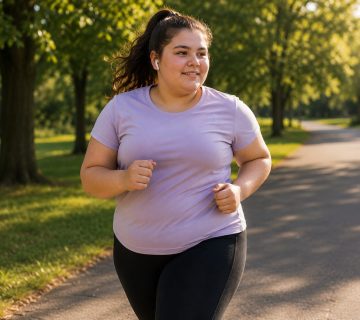
Start small: Dancing, swimming, basketball, a walk around the neighborhood, anything that's genuinely fun. For a teen girl who already has a complicated relationship with her body, movement needs to feel good, not punishing. Enjoyable movement is consistent movement. And consistent movement is what changes insulin resistance.
Sleep and PCOS in Teenage Girls
This one gets overlooked more than it should. Poor sleep is a direct driver of insulin resistance, and for teen girls with PCOS, that extra insulin resistance is the last thing they need.
When teenagers are chronically sleep-deprived, cortisol rises, hunger hormones go haywire, and the body's ability to manage blood sugar gets meaningfully worse. It's not just about being tired. It's a metabolic problem.
Pick one thing: A consistent bedtime. Phone out of the bedroom. Turn off the screens 30 minutes before sleep. Small changes to sleep can create meaningful improvements in insulin sensitivity and support the hormonal balance your daughter's body is working toward.
When to See a Doctor About PCOS in Teenage Girls
If your daughter has irregular or missing periods, visible skin changes like acne or dark patches on the neck, or unexplained weight gain, it's worth a conversation with her doctor. Ask specifically about:
- Fasting insulin and glucose — not always part of standard blood work, so ask by name
- Androgen levels (testosterone and DHEA)
- Hemoglobin A1C — a longer-term blood sugar marker
- A referral to a pediatric endocrinologist for a full hormonal and metabolic evaluation
There are also medications like metformin that address insulin resistance directly, and others that regulate androgens. These have a real place in treatment. But medication and lifestyle work best together. If you combine both, you may be able to use less medication, come off it sooner, or make it significantly more effective. Learn more about how to reverse prediabetes and insulin resistance in teenagers for a deeper look at the metabolic picture.
Your Next Steps
If you've recognized PCOS in your own daughter, know this: you are in exactly the right place. A clear path forward exists. Her body is not broken. Her hormones are responding to a system under strain — and that system can be supported.
- Want to understand the root cause of Prediabetes and Insulin Resistance in teenagers? Read: 7 Alarming Facts About Prediabetes in Teenagers Every Parent Must Know
- Teen already diagnosed with Prediabetes? Read: How to Reverse Prediabetes in Teenagers
- For weekly guidance on teen hormones and metabolic health, listen to the Lifestyle and Weight Loss for Teens Podcast
- Grab 30 free high-protein recipes that support healthy insulin levels — free at members.lifestyleforteens.com/f/30-easy-and-healthy-recipes-for-teens
Ready for real, structured support? The MINI LIFT Program is designed specifically for teen girls navigating PCOS, insulin resistance, and hormonal imbalances. A clear plan. Expert guidance. A community that gets it. No restriction. No shame. Just small, consistent habits that build real change. Join the MINI LIFT Program here.
Common Questions
What is PCOS in teenage girls?
What causes PCOS in teenagers?
How is PCOS diagnosed in a teenager?
Can lifestyle changes really help a teen with PCOS?
About the Author
Dr. Jenny Gourgari, MD — Pediatric Endocrinologist & Obesity Medicine Specialist
Dr. Jenny is a board-certified Pediatric Endocrinologist and Obesity Medicine Specialist with 15+ years of experience helping teens with insulin resistance and prediabetes. She is the founder of Lifestyle for Teens and creator of the LIFT 100-Day Program. No diets. No shame. Just hormones that work.
Board Certified: Pediatric Endocrinology • Pediatrics • Obesity Medicine (ABOM) • MSc, Georgetown University • Full credentials →





No comment