


How Much Protein Does My Teenager Need? 15 Essential Food Sources
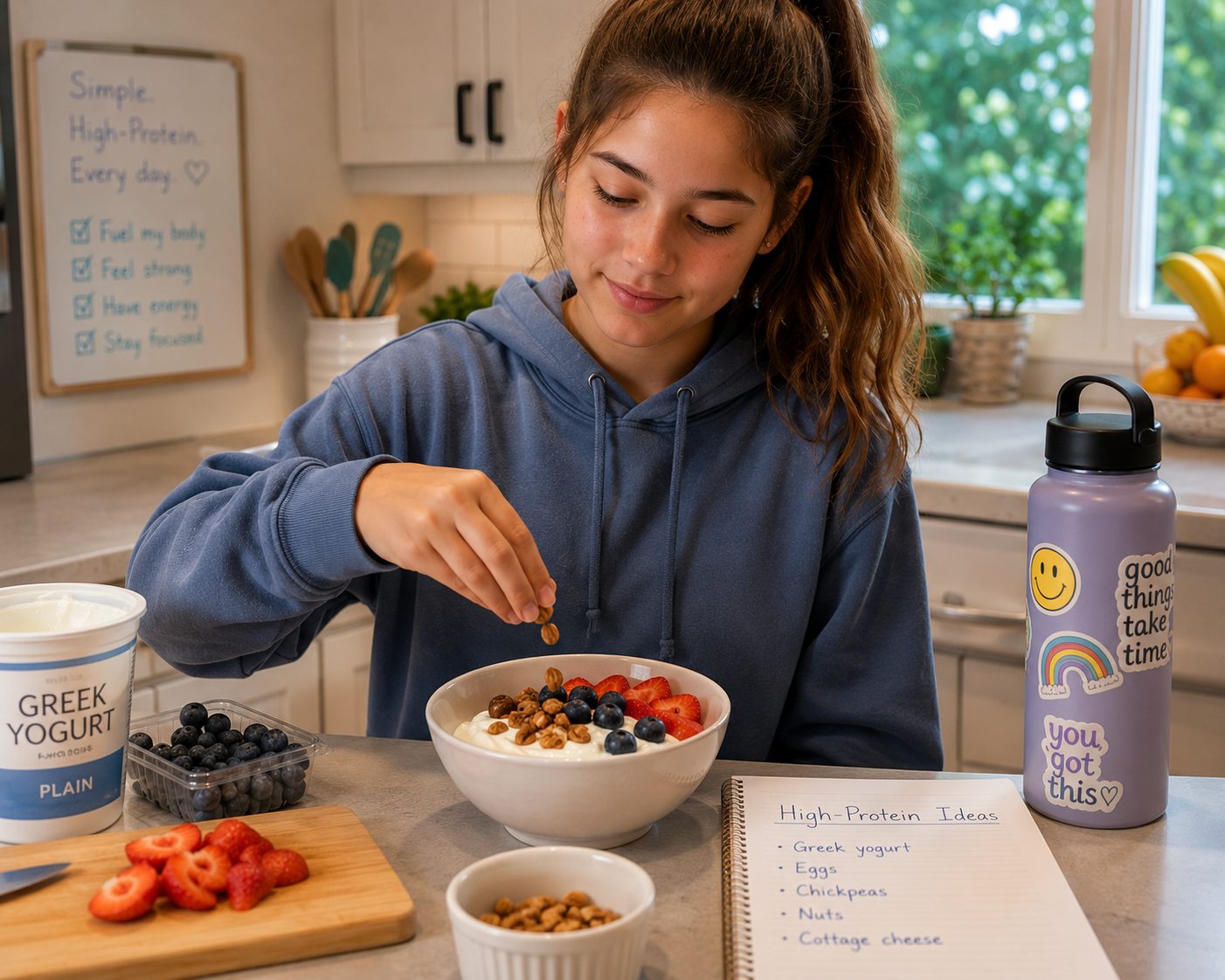
How much protein does my teenager need is one of the questions I hear most often from families trying to get their teen to a healthier weight. Right alongside it come a few related ones: where do I even get this protein from? Is this protein obsession real, or is it just trending on social media? And does it actually matter whether my teenager's calories come from protein versus fat and carbohydrates?
These are excellent questions, and I want to answer all of them clearly today, because protein genuinely deserves the attention it gets, especially during the teenage years.
How Much Protein Does My Teenager Need? The Exact Numbers
Let's start with the actual numbers, because this is the part most parents want first.
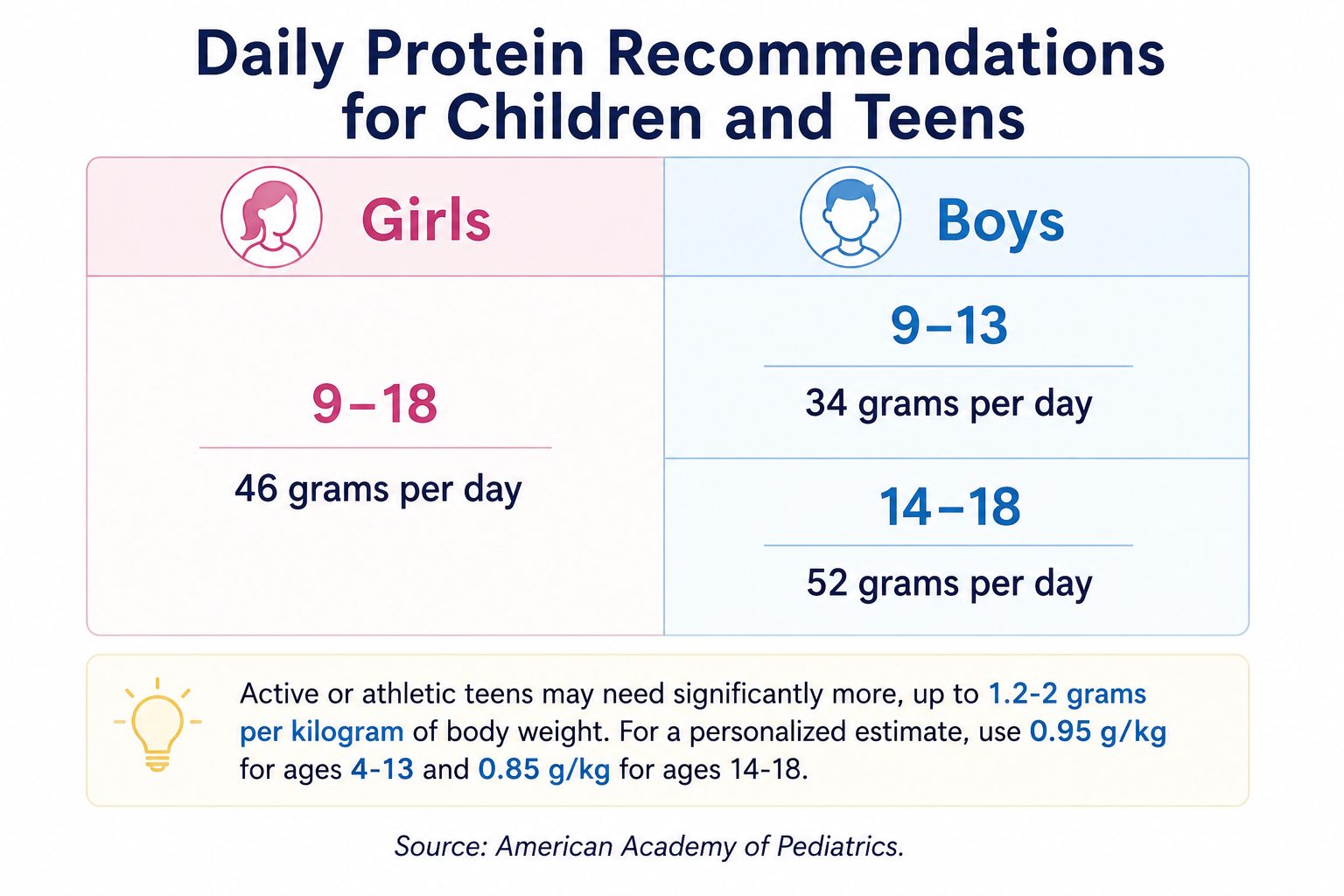
According to the American Academy of Pediatrics, teenage girls between the ages of 9 and 18 require approximately 46 grams of protein per day. Teenage boys between 9 and 13 require approximately 34 grams per day, and that increases to 52 grams per day once boys reach 14 through 18.
These figures are confirmed directly by HealthyChildren.org, the parenting resource of the American Academy of Pediatrics, which notes that protein generally makes up between 10 and 30 percent of a teenager's daily calories for children and adolescents, with the broader Acceptable Macronutrient Distribution Range extending up to 35 percent for anyone over age 3
Now, this is just a general rule, and I want to be clear that not every 14-year-old is the same height, weight, or activity level. A competitive swimmer, soccer player, or dancer has meaningfully different protein needs than a teenager who is more sedentary.
A More Personalized Way to Calculate How Much Protein Does My Teenager Need
If you want a more individualized number, there is a simple formula based on body weight. Convert your teenager's weight from pounds to kilograms by dividing by 2.2, then multiply by 0.85 if your teenager is between 14 and 18. For younger teens, ages 4 to 13, the multiplier is slightly higher, at 0.95, since younger children have proportionally greater protein needs for growth.
Here is an example for a 14-to-18-year-old. A teenager who weighs 110 pounds weighs about 50 kilograms. Multiply 50 by 0.85, and you get approximately 42.5 grams of protein per day as a general baseline. For a younger teenager of the same weight, using the 0.95 multiplier instead would put the baseline closer to 47.5 grams
For teenagers who are very physically active, athletic, or involved in competitive sports, this range increases significantly, often to between 1.2 and 2 grams of protein per kilogram of body weight, depending on the intensity and frequency of their training.
Where to Get Protein: 15 Whole Food Sources
Protein does not only come from meat, although meat is certainly one excellent source. Here are 15 genuinely good sources of protein that also bring along fiber, vitamins, and healthy fats:
- Chicken, fish, beef, and pork, all excellent complete protein sources
- Lentils, great in soups, stews, or salads
- Chickpeas, perfect roasted as a snack, in hummus, or in salads
- Beans, including black beans, kidney beans, and pinto beans, ideal in a burrito or with rice
- Edamame, young soybeans that microwave easily with a bit of salt or olive oil
- Greek yogurt, cheese, and soy milk
- Eggs, one of the most versatile and complete protein sources available
- Quinoa, usable as a rice substitute or in a salad bowl
- Farro and barley, especially good roasted for added crunch
- Oats, which also help with satiety and reduce hunger for hours after breakfast
- Almonds, walnuts, cashews, chia seeds, flax seeds, pumpkin seeds, and sunflower seeds
- Broccoli, Brussels sprouts, spinach, and kale, which contain meaningful protein alongside fiber
For more on how oats compare to other common breakfast choices and why they help with satiety, listen to Episode 41 of the podcast, where I compare oatmeal to cornflakes in detail.
Should I Use Protein Powder to Help My Teenager Meet Protein Needs?
This question comes up often, and I want to be straightforward about it.
Some plant-based protein powders, such as brown rice protein or pea protein, tend to be somewhat healthier options compared to other powders because they typically contain more fiber. That said, my general recommendation is to prioritize whole food sources over powders whenever possible.
The reason is straightforward. When you eat real food, like three eggs, you know exactly what you are getting. Protein powders are processed products that often include added sugar, artificial sweeteners, and other ingredients that are not always clearly disclosed or consistently regulated. It can be genuinely difficult to know exactly what is in a specific powder.
Our bodies are built to process whole foods, not processed substitutes. If your teenager struggles to meet their protein needs through food alone, it is worth exploring whole food options first, like adding lentils to a salad, an extra egg at breakfast, or a handful of edamame as a snack, before turning to a powder. I am not saying never use one. In fact, the International Society of Sports Nutrition notes that protein supplementation can be a practical way for athletes to meet protein needs while managing overall calorie intake, particularly for teenagers training at high volumes. If your teenager is a serious athlete and whole foods alone aren't getting them there, a quality powder can reasonably fill the gap. For most teenagers who are not training at that level, I'd still suggest leading with whole food sources first, simply because they come with fewer unknowns
Why Protein Matters So Much During the Teenage Years
You might wonder why we cannot simply hit a calorie target using mostly carbohydrates instead. Here is the honest, science-backed answer.
The teenage years are a period of significant growth. Muscles are being built, bones are developing, and major growth spurts are happening. Protein is the essential nutrient that supports this construction process. It does not build muscle on its own. Exercise and movement are what actually build muscle. But without adequate protein, your teenager's muscles cannot fully benefit from the exercise they are doing. Protein is the necessary raw material; movement is what puts it to use.
Protein is also closely tied to the hormonal surges of puberty, including testosterone in boys, estradiol in girls, insulin, and growth hormone. These hormones, and the enzymes involved in regulating them, depend on essential amino acids, which is what protein is made of. Protein does not create these hormones by itself, but it is a necessary building block for healthy hormone regulation during this period.
To understand more about how these puberty hormones interact with insulin specifically, my post on insulin resistance in teens explains the connection in detail.
Protein also serves as a backup energy source when carbohydrate intake is insufficient, supports muscle repair after exercise (which matters a great deal for teenagers involved in sports), and contributes to healthy skin, hair, and nails, which can genuinely support a teenager's confidence.
The Protein and Insulin Connection
Here is one more piece worth understanding, with a bit more nuance than is often presented. The relationship between protein and insulin is genuinely more complex than a simple rule. Protein itself can stimulate insulin secretion, and the effect of adding protein to a carbohydrate-containing meal isn't always a straightforward slowdown in insulin response; some research even shows high-protein meals can delay how quickly blood sugar processes afterward in certain individuals. What does seem to hold up consistently is the effect on fullness: protein reliably supports satiety, meaning your teenager is more likely to stay full longer and experience fewer intense cravings between meals, even if the exact insulin mechanics are still being researched.
Building healthier muscle through adequate protein intake also increases metabolism over time, which supports a healthier weight in a sustainable way, without restriction or counting calories obsessively.
This is also why generic advice to simply eat less rarely works for teenagers. My post on why eat less move more fails teenagers explains exactly why food quality, including protein intake, matters so much more than calorie counting alone.
Try This: A Simple Way to Check How Much Protein Does My Teenager Need
As you think through how much protein does my teenager need, here is a simple, doable action step. Calculate a rough estimate using either the general RDA figures or the body weight formula above. Then keep a simple food diary for a few days, just noting what your teenager eats.
Compare what you find against that estimate. If your teenager is falling short, do not panic and do not overhaul everything at once. Just pick one or two small additions. Maybe it is adding an egg at breakfast, lentils to a lunchtime salad, or edamame as an after-school snack.
Small, consistent additions like these compound into a meaningfully better protein intake over time, and that supports your teenager's growth, hormones, energy, and overall metabolic health, without any restriction or pressure involved.
For 30 free high-protein recipes designed specifically for teenagers that take under 30 minutes to prepare, visit lifestyleforteens.com/recipes.
NEXT STEPS
If your teen needs support to build these habits, this is exactly why I created the 100-Day LIFT Program — a pediatric weight management program that does not focus on dieting at all. It addresses the root cause: dysregulated insulin and the hormonal patterns behind the constant hunger, fatigue, and weight gain so many teens are quietly carrying. Over 100 days, we focus on steady blood sugar, protein-forward food, better sleep, calmer stress, and the specific kinds of movement that genuinely improve insulin sensitivity in teenagers.
There is no calorie counting. No food restriction. No shame-based language — because none of that works when the issue is biological, not behavioral.
And this is not an app. Parents and teens get direct, live access to me throughout the program — real conversations, real answers, real support. Not a chatbot. Not a feedback form. A pediatric endocrinologist who knows your teen and is walking the process with you, week by week.
Reach out to learn more, or book a free call with me to see if it is the right fit for your family.
For weekly guidance on teen metabolic health, hormones, and nutrition, I also share something new every week on my Lifestyle and Weight Loss for Teens podcast.
Frequently Asked Questions
How much protein does my teenager need per day?
According to the American Academy of Pediatrics, teenage girls between 9 and 18 need approximately 46 grams of protein per day. Teenage boys need approximately 34 grams per day between ages 9 and 13, increasing to 52 grams per day between ages 14 and 18. How much protein does my teenager need specifically can also be calculated by converting their body weight to kilograms and multiplying by 0.85, which gives a more personalized baseline. Active or athletic teenagers may need significantly more, up to 1.2 to 2 grams per kilogram of body weight.
What are the best protein sources for teenagers besides meat?
Excellent non-meat protein sources include lentils, chickpeas, black beans, kidney beans, edamame, Greek yogurt, cheese, soy milk, eggs, quinoa, farro, barley, oats, and a variety of nuts and seeds including almonds, walnuts, chia seeds, and pumpkin seeds. Several vegetables, including broccoli, Brussels sprouts, spinach, and kale, also contribute meaningful protein alongside fiber and vitamins.
Is protein powder safe and necessary for teenagers?
Protein powder is not generally necessary for most teenagers who eat a varied diet that includes adequate protein sources. Whole foods are typically the better choice because protein powders are processed products that can contain added sugar, artificial sweeteners, and ingredients that are not always clearly disclosed. If your teenager struggles to meet their protein needs through food, it is worth trying additional whole food sources first, such as eggs, lentils, or Greek yogurt, before considering a powder.
Do athletic teenagers need more protein than the standard RDA?
Yes. Teenagers who are very physically active, including competitive athletes, often need significantly more protein than the standard RDA, sometimes between 1.2 and 2 grams per kilogram of body weight, depending on the intensity and frequency of training. This higher requirement supports muscle repair after exercise and helps maximize the benefits of training.
Why is protein especially important during the teenage years?
The teenage years involve significant growth, including muscle development, bone growth, and the hormonal changes of puberty, such as testosterone, estradiol, insulin, and growth hormone. Protein provides the essential amino acids needed to support these processes. It is also important for muscle repair after exercise, for healthy skin, hair, and nails, and for improving satiety by slowing the insulin response when paired with carbohydrates.
Does eating more protein than recommended build extra muscle?
No. Eating protein beyond what your body needs does not automatically build additional muscle. Protein is a necessary nutrient that supports the muscle-building process, but it works alongside physical activity rather than replacing the need for it. Consuming protein without adequate carbohydrate and fat intake, or without physical activity, will not produce additional muscle growth on its own.
About the Author
Dr. Jenny Gourgari, MD — Pediatric Endocrinologist & Obesity Medicine Specialist
Dr. Jenny is a board-certified Pediatric Endocrinologist and Obesity Medicine Specialist with 15+ years of experience helping teens with insulin resistance and prediabetes. She is the founder of Lifestyle for Teens and creator of the LIFT 100-Day Program. No diets. No shame. Just hormones that work.
Board Certified: Pediatric Endocrinology • Pediatrics • Obesity Medicine (ABOM) • MSc, Georgetown University • Full credentials →




No comment