


How to Reverse Prediabetes in Teenagers

If your teenager has been diagnosed with prediabetes, the first thing I want you to know is this: how to reverse prediabetes in teenagers is one of the most common questions I get from parents, and the answer is genuinely hopeful. Between 30 and 50 percent of teenagers who make targeted lifestyle changes return to completely normal blood sugar levels. Without medication. Without extreme diets. Without shame.
But here is the part that parents often do not realise. Prediabetes in teenagers is not the same as prediabetes in adults. Teenagers face additional biological pressures that adults simply do not have, and the standard advice written for a 45-year-old does not always translate to a 14-year-old going through puberty.
In this post, I am going to walk you through exactly what makes teen prediabetes unique and the six specific steps that actually work for this age group. These are the same steps I guide families through in my practice every single day.
Why Reversing Prediabetes in Teenagers Is Both Urgent and Possible
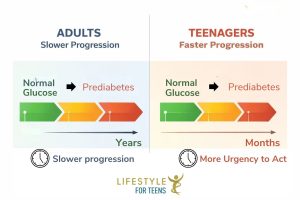
The reason I feel so strongly about acting quickly is not to frighten you. It is because the teenage years are actually one of the best windows to make a meaningful difference.
Research shows that lifestyle interventions in teenagers can lower blood sugar, reduce insulin resistance, and normalize glucose levels within months. The teenage body is still growing, still developing, and highly responsive to the right changes. The problem is that most families wait too long or try approaches designed for adults that do not suit teenage biology.
Youth-onset type 2 diabetes progresses faster than adult diabetes. Beta cells, the cells in the pancreas responsible for producing insulin, decline more rapidly in young people. This is exactly why how to reverse prediabetes in teenagers is a question worth taking seriously right now, not next year.
What Makes Reversing Prediabetes in Teenagers Different from Adults

Here are three things that are unique to teenagers that any approach needs to account for:
- Puberty hormones increase insulin resistance by 25 to 30 percent. This means a teenager is fighting an additional hormonal headwind that an adult is not dealing with. The good news is that this resolves after puberty, so the intervention window is real.
- Calorie restriction is dangerous for teens. Unlike adults, teenagers should never be put on a strict calorie-cutting diet. Their bodies are still growing and need adequate nutrition. The approach for teens focuses on food quality and composition, not quantity.
- Lifestyle changes need family involvement. Studies consistently show that lifestyle interventions work far better in teenagers when the whole family participates. A teenager cannot realistically change their diet and habits in isolation from the household around them.
The 6 Proven Steps: How to Reverse Prediabetes in Teenagers
Step 1: Replace Refined Carbohydrates With Whole Food Alternatives
This is the single most impactful dietary change a family can make. Refined carbohydrates, such as white bread, white rice, chips, sugary cereals, and sweetened drinks, are quickly broken down into sugar and cause rapid blood sugar spikes. These repeated spikes are what wear the pancreas down over time.
You do not need to eliminate carbohydrates. You need to replace the fast ones with the slow ones. Whole grains, legumes, vegetables, and fruits all digest more slowly, release glucose gradually, and keep blood sugar stable throughout the day. Start with one swap per week so it does not feel overwhelming.
Step 2: Add Protein to Every Single Meal
Protein slows the absorption of carbohydrates, which directly reduces the blood sugar spike that follows a meal. It also supports muscle building, and muscle tissue is one of the primary sites where the body uses glucose, which improves insulin sensitivity over time.
Aim for at least 20 grams of protein at breakfast, lunch, and dinner. Eggs, Greek yogurt, chicken, fish, cottage cheese, legumes, and nuts are all excellent options. This does not need to be complicated. A boiled egg added to breakfast, a handful of nuts as a snack, and a chicken breast at dinner can get you most of the way there.
Step 3: Make Movement a Daily Non-Negotiable
Exercise is one of the fastest ways to improve insulin sensitivity. When muscles contract during physical activity, they absorb glucose from the bloodstream without needing insulin. This effect begins immediately after a single session of exercise and builds over time with consistency.
The goal is not intense training. It is consistent, enjoyable daily movement. A 20 to 30 minute walk after dinner, a bike ride, swimming, dancing, or a team sport all count. The American Academy of Pediatrics recommends 60 minutes of movement daily for teenagers. If your teenager is currently sedentary, start with 20 minutes and build from there.
Step 4: Prioritise Sleep Without Compromise
Chronic sleep deprivation is one of the most overlooked drivers of insulin resistance in teenagers. When the body does not get enough sleep, cortisol levels rise, and insulin sensitivity drops the next day. Research shows that sleep disruption directly increases blood sugar dysregulation.
Teenagers need 8 to 10 hours of sleep every night. Practical steps that make a real difference include setting a consistent bedtime even on weekends, removing phones from the bedroom, dimming screens at least an hour before bed, and, if possible, advocating for later school start times if they are available in your district.
Step 5: Reduce Stress and Support Emotional Health
Cortisol, the primary stress hormone, directly worsens insulin resistance. A teenager under chronic stress from academic pressure, social anxiety, family challenges, or body image concerns is fighting an uphill metabolic battle, regardless of how well they eat.
This does not mean eliminating stress, which is impossible. It means building in regular stress-reducing activities: physical movement, creative outlets, time in nature, strong social connections, and open conversations at home. A teenager who feels emotionally supported is significantly more likely to follow through on lifestyle changes than one who feels pressured or ashamed.
Step 6: Make It a Family Lifestyle, Not an Individual Problem
This is perhaps the most important step of all, and the one most families skip. Research consistently shows that lifestyle interventions work dramatically better in teenagers when the entire family makes the changes together. When one teenager is told to eat differently while the rest of the household continues as normal, it creates shame, resentment, and almost always fails.
Cook the same healthy meals for everyone and make the dinner table a space where healthy choices feel normal rather than forced. Family walks after dinner are a simple habit that supports both blood sugar and connection. When the sugary drinks disappear from the household for everyone, not just your teenager, it stops feeling like a punishment and starts feeling like a shared decision. Frame every change as something you are doing together for your collective health.
How Long Does It Take to Reverse Prediabetes in Teenagers?
This is the question every parent wants answered. The honest answer is that meaningful improvements in blood sugar and insulin sensitivity can happen within weeks of consistent lifestyle change. Some families see significant results within two to three months, other see results after 6 months. It depends on how committed each person is and how effective the lifestyle changes are for each teenager.
Reversal, meaning a return to completely normal blood sugar levels, typically takes three to twelve months, depending on how consistently the changes are applied and how elevated the blood sugar was to begin with.
The key is not perfection. It is consistency over time. A teenager who makes moderate improvements consistently will always outperform one who makes dramatic changes for two weeks and then stops.
When to Get Professional Help
Lifestyle change is the first line of treatment for teen prediabetes in most cases. However, there are situations where medication may also be appropriate. If your teenager's blood sugar is not improving after three to six months of genuine lifestyle effort, or if it is already very close to the diabetes threshold, talk to your pediatric endocrinologist about whether medication like metformin makes sense alongside the lifestyle changes.
The most important thing is not to try to manage this alone. Get professional support. Get the support you need to prevent diabetes. And keep going even when progress feels slow.
NEXT STEPS: You can check out a previous post I wrote about the root causes of prediabetes in teenagers, which explains the science behind why this happens in the first place. For more practical tips on teen nutrition and metabolic health, listen to my Lifestyle and Weight Loss for Teens podcast. New episodes every week. I put together 30 free high-protein recipes for teenagers that support healthy blood sugar. Grab them free: members.lifestyleforteens.com/f/30-easy-and-healthy-recipes-for-teens If you want structured support for your family, here is how I can help: Join the MINI LIFT PROGRAM |
Common Questions
Can prediabetes in a teenager actually be reversed?
How long does it take to reverse prediabetes in teens?
What's the most effective dietary change for reversing teen prediabetes?
Does exercise alone reverse teen prediabetes?
About the Author
Dr. Jenny Gourgari, MD — Pediatric Endocrinologist & Obesity Medicine Specialist
Dr. Jenny is a board-certified Pediatric Endocrinologist and Obesity Medicine Specialist with 15+ years of experience helping teens with insulin resistance and prediabetes. She is the founder of Lifestyle for Teens and creator of the LIFT 100-Day Program. No diets. No shame. Just hormones that work.
Board Certified: Pediatric Endocrinology • Pediatrics • Obesity Medicine (ABOM) • MSc, Georgetown University • Full credentials →






No comment