


7 Alarming Facts About Prediabetes in Teenagers Every Parent Must Know

Prediabetes in teenagers is no longer a rare or distant concern. According to the CDC, nearly 1 in 3 American teenagers between the ages of 12 and 17 currently has prediabetes. That is approximately 8.4 million young people whose bodies are already under serious metabolic stress, most of them completely unaware.
As a pediatric endocrinologist, I see this every day in my practice. And the hardest part is not the diagnosis itself. It is the fact that most parents never saw it coming because prediabetes has no obvious symptoms. Your teenager can look perfectly healthy on the outside while their pancreas is quietly working twice as hard as it should.
The good news is this: prediabetes is reversible. Between 30 and 50 percent of teenagers who make targeted lifestyle changes get their blood sugar levels back to normal. But first, you need to understand what is actually happening in their body, why teenagers are particularly vulnerable, and what you can do about it starting today.
That is exactly what I am covering in this post.
What Is Prediabetes in Teenagers and Why Should Parents Be Concerned?
Prediabetes in teenagers is a metabolic condition where blood sugar levels are higher than normal but not yet high enough to be classified as type 2 diabetes. Think of it as your body sending a clear warning signal that something needs to change.
Here is how the numbers break down. A fasting blood sugar between 100 and 125 mg/dL is classified as prediabetes. A hemoglobin A1C level between 5.7 and 6.4 percent also indicates prediabetes. And during a specialized oral glucose tolerance test where your child drinks 75 grams of sugar, a two-hour reading between 140 and 199 mg/dL also points to prediabetes.
If any of these numbers are reached or exceeded, the diagnosis becomes type 2 diabetes. Prediabetes is the stage right before that line gets crossed.
What makes this especially concerning for teenagers is that youth-onset diabetes progresses much more aggressively than adult-onset diabetes. The beta cells in young people decline faster, and complications develop earlier in life. This is not a condition you want to wait on.
How Prediabetes Develops: The Role of Insulin and the Pancreas
To understand prediabetes, you need to understand what happens every time your teenager eats something that contains carbohydrates, whether that is pasta, rice, bread, pizza, cereal, or a dessert.
When carbohydrates enter the body, they are broken down into sugar, which causes blood glucose levels to rise. In response, the pancreas releases a hormone called insulin. Insulin's job is to bring that blood sugar back down to a safe level.
This system works beautifully when it is not being overloaded. But here is where the problem begins.
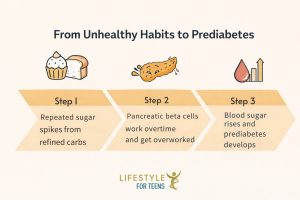
When a teenager regularly eats large amounts of refined carbohydrates and sugary foods, the pancreas has to produce more and more insulin to keep up. Over time, the cells in the body become less responsive to insulin. The pancreas then has to produce even more to get the same result. This is called insulin resistance.
The cells responsible for producing insulin are called beta cells, and they live in the pancreas. In the early stages of insulin resistance, the beta cells simply work harder. But like any chronically overworked system, they eventually start to tire out. When beta cell function begins to decline, blood sugar levels start to creep up. That is the moment prediabetes begins.
What Causes Prediabetes in Teenagers Specifically?
This is the question I get asked most often by parents. The root cause of prediabetes in teenagers is the same as in adults in many ways, but teenagers face an additional biological challenge that adults simply do not have to deal with. That challenge is puberty.
The Adult Risk Factors (That Also Apply to Teens)
These are the risk factors that can increase prediabetes risk at any age:
- Excess body fat, particularly belly fat (also called visceral or central adiposity). Fat stored around the waist is directly linked to higher insulin resistance and a greater risk of prediabetes.
- Family history of type 2 diabetes. Certain genes passed down through families can predispose a teenager to beta-cell dysfunction even without significant weight gain.
- Racial and ethnic background. Research shows that Black, Hispanic, Latino, and Native Alaskan populations face a statistically higher risk of developing prediabetes and type 2 diabetes.
- Poor sleep. Regularly disrupted or insufficient sleep directly affects insulin sensitivity and increases prediabetes risk.
- Low physical activity. Exercise is one of the fastest ways to improve insulin sensitivity. A sedentary lifestyle removes this protective effect entirely.
- A diet high in refined carbohydrates. Processed foods, sugary drinks, white bread, and fast food all contribute to repeated blood sugar spikes that wear the beta cells down over time.
The Extra Factor That Makes Teenagers More Vulnerable: Puberty Hormones
Here is what is unique about teenagers. During puberty, the body produces high levels of growth hormone. This growth hormone creates an additional layer of insulin resistance on top of whatever is already there from diet and lifestyle. Research shows puberty alone can worsen insulin resistance by 25 to 30 percent.
So, picture a teenager who is already eating poorly, not sleeping enough, spending hours in front of screens, and not getting regular exercise. Now add puberty on top of all of that, and you can see why nearly 1 in 3 teenagers in the United States now has prediabetes. It is not one thing. It is multiple factors stacking on top of each other at the most vulnerable hormonal period of their life.
The 7 Alarming Facts About Prediabetes in Teenagers
- Nearly 1 in 3 Teenagers in the US Currently Has Prediabetes
A 2023 CDC report found that approximately 8.4 million teenagers between 12 and 17 years old have prediabetes. The rate has more than doubled since 1999. This is not a niche health issue. It is a widespread epidemic affecting ordinary families across the country.
- Most Teenagers With Prediabetes Have No Symptoms
Prediabetes is largely silent. There is no pain, no obvious physical sign, and no clear warning that something is wrong. The only way to know is through a blood test. This is why regular screening matters, especially if your teenager carries excess weight, has a family history of diabetes, or is sedentary.
- Puberty Makes It Significantly Worse
As I mentioned earlier, growth hormone during puberty can increase insulin resistance by 25 to 30 percent. This means a teenager who might have been fine metabolically as a child can develop prediabetes during puberty simply because of the hormonal changes their body is going through, especially if other risk factors are already present.
- Youth-Onset Type 2 Diabetes Progresses Faster Than Adult Diabetes
If prediabetes is not addressed and a teenager goes on to develop type 2 diabetes, the disease tends to progress much more aggressively than it does in adults. Beta cell decline happens faster. Complications like kidney disease, nerve damage, and cardiovascular problems can develop earlier in life. This is why catching and reversing prediabetes during the teenage years is so critically important.
- Belly Fat Is a Major Driver
Not all body fat carries the same risk. Fat stored around the belly and internal organs, known as visceral fat, is far more metabolically active than fat stored in the arms or legs. It directly drives insulin resistance and is one of the strongest predictors of prediabetes risk in both teens and adults. This is why waist measurement, not just weight, matters when assessing a teenager's metabolic health.
- Screen Time and Sedentary Behaviour Are Contributing Factors
Every hour a teenager spends sitting in front of a screen is an hour they are not moving their muscles. Exercise makes muscles more insulin sensitive almost immediately. A lack of physical activity removes this benefit entirely, and when combined with poor nutrition, high growth hormone levels, and disrupted sleep, it creates the perfect conditions for insulin resistance to develop.
- It Is Reversible With the Right Lifestyle Changes
This is the fact I most want every parent to hold onto. Between 30 and 50 percent of teenagers with prediabetes can return to completely normal blood sugar levels through lifestyle modification alone. No medication required. The key is acting before the beta cells reach the point of no return.
5 Lifestyle Changes That Can Help Reverse Prediabetes in Teenagers
If your teenager has been diagnosed with prediabetes, or if you are concerned about their risk, these are the five most impactful changes you can make as a family:
- Reduce Refined Carbohydrates and Sugary Foods
This does not mean eliminating all carbohydrates. It means replacing refined, processed carbohydrates like white bread, sugary cereals, chips, and sweetened drinks with whole grain options, vegetables, legumes, and foods that digest more slowly and cause smaller blood sugar spikes.
- Increase Protein at Every Meal
Protein slows digestion, reduces blood sugar spikes, supports muscle building, and keeps your teenager fuller for longer. Adding more protein to breakfast, lunch, and dinner is one of the most practical changes a family can make. I have talked about this in detail in previous episodes and blog posts, including the research on high-protein breakfast specifically.
- Make Movement a Daily Habit
Exercise improves insulin sensitivity immediately. Even a 20 to 30-minute walk after a meal can meaningfully reduce blood sugar levels. The goal is not intense training. It is consistent, enjoyable daily movement. Help your teenager find something they actually like doing, whether that is dancing, swimming, cycling, or team sports.
- Prioritise Sleep
Teenagers need 8 to 10 hours of sleep per night. Chronic sleep deprivation directly worsens insulin resistance. Practical steps include setting consistent bedtimes, keeping phones out of the bedroom, and avoiding screens for at least an hour before sleep.
- Address Belly Fat Through Sustainable Habits
Crash diets and extreme calorie restriction do not work for teenagers and can cause lasting psychological harm. The goal is to reduce visceral fat gradually through the combination of improved nutrition, regular movement, and better sleep. Small, consistent changes over months produce the kind of results that actually stick.
What You Can Do Right Now
Remember, prediabetes in teenagers is not a life sentence. It is a warning signal, and if you act on it, there is every reason to be optimistic. The body is remarkably responsive to lifestyle change, especially in young people whose metabolism is still flexible.
You can also check out a previous blog post I wrote about understanding insulin resistance in teens, where I go deeper into the hormonal side of this topic.
For more practical tips on teen nutrition, hormones, and healthy weight management, listen to my Lifestyle and Weight Loss for Teens podcast, where I break down the science every week in a way that is actually easy to apply at home. You can also visit my website for more free resources to support your family on this journey.
I put together 30 easy and healthy recipes for teens that are high in protein and low in refined carbohydrates, which you can grab completely free right here
If you would like more structured support, I also have a coaching program for teens who are struggling with their weight and metabolic health. Join Here
Do not stop working toward healthier habits. Small changes that are persistent over time can have enormous results. This is not a sprint. It is a lifestyle shift that will change your teenager's whole health trajectory for the rest of their life.
Common Questions
How common is prediabetes in American teenagers?
What are the early warning signs of prediabetes in a teen?
Will teen prediabetes always become type 2 diabetes?
Should every teenager be tested for prediabetes?
About the Author
Dr. Jenny Gourgari, MD — Pediatric Endocrinologist & Obesity Medicine Specialist
Dr. Jenny is a board-certified Pediatric Endocrinologist and Obesity Medicine Specialist with 15+ years of experience helping teens with insulin resistance and prediabetes. She is the founder of Lifestyle for Teens and creator of the LIFT 100-Day Program. No diets. No shame. Just hormones that work.
Board Certified: Pediatric Endocrinology • Pediatrics • Obesity Medicine (ABOM) • MSc, Georgetown University • Full credentials →






No comment