


Dark Neck Skin in Teenagers: What That Patch Is Really Telling You (And What To Do About It)
The first thing most parents do is hand their teenager a different soap.
Scrubbing happens. Different cleansers are tried. Parents start to wonder quietly, and sometimes not so quietly, whether their teen is actually washing properly. Weeks go by. Months pass. And the dark neck skin in teenagers that brought them here hasn't changed at all.
That's usually when families end up in my office.
Here's what I tell them: it won't wash off, because it was never dirt to begin with. That dark patch on a teen's neck is not a hygiene issue. It is a metabolic signal. Your teenager's body is doing something bodies are quite good at: trying to get your attention. Once you understand what it's really saying, everything changes.
What Is Dark Neck Skin in Teenagers, Exactly?
The medical name is acanthosis nigricans, and that is the most complicated thing about this whole conversation.
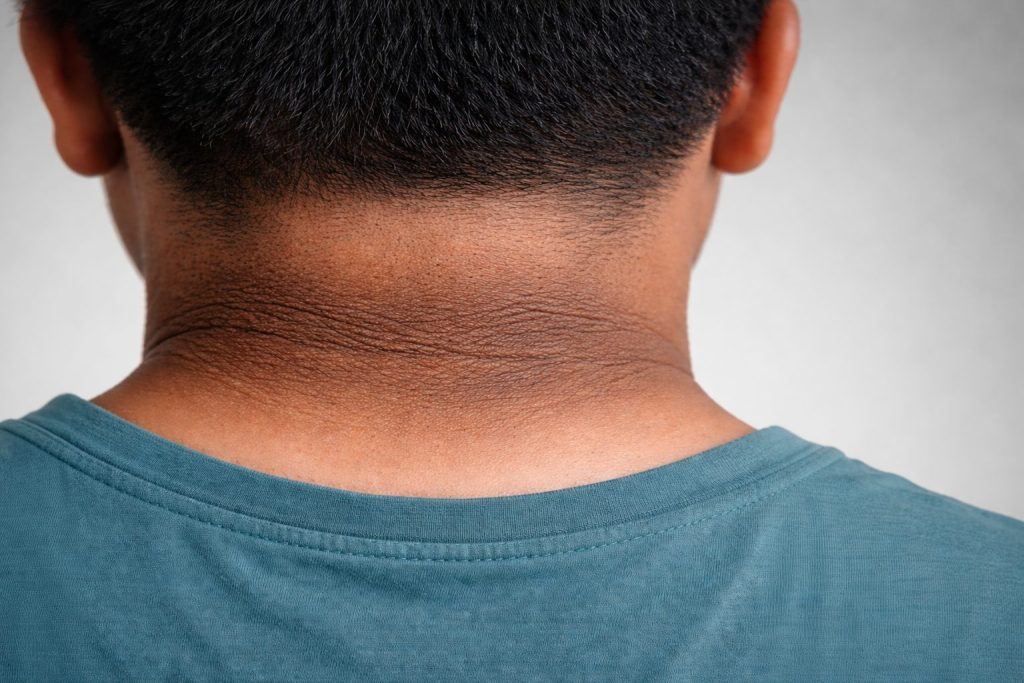
You'll notice it as a dark, slightly raised, velvety patch of skin, usually on the back and sides of the neck. The texture often feels softer than the surrounding skin. The color can range from light brown to quite dark, depending on your teen's natural skin tone.
Here is the key thing: this is not a skin condition from the outside. Sunlight, allergens, and poor hygiene don't cause it. The source is internal, specifically, excess insulin in the bloodstream.
When the body develops insulin resistance, the pancreas responds by producing more and more insulin to compensate. That excess insulin activates receptors in skin cells, causing them to multiply faster than normal. In teens with deeper skin tones, those rapidly multiplying cells produce more melanin, which creates the characteristic dark neck skin in teenagers we recognize as acanthosis nigricans.
Put simply, the dark skin on the neck is your teen's body flagging a hormonal imbalance happening deep inside. It is a visible, external sign of an internal metabolic shift. In my experience as a pediatric endocrinologist, when I see it, it's always worth investigating.
Where Else Should You Check for Skin Darkening in Your Teen?
Common Locations Beyond the Neck
The neck is where most parents notice dark, velvety skin on a teenager's neck first. But acanthosis nigricans can show up in other places, too. It's worth doing a gentle check of:
- The underarms — very common, and often overlooked because it's hidden
- The inner thighs and groin — skin folds are a common location
- Around the belly — especially where skin folds over
- The elbows, knuckles, or between the fingers — less common, but possible in more advanced insulin resistance
- Skin tags — small, soft growths in the same areas are also linked to elevated insulin levels

Puberty vs. Insulin Resistance: What's the Difference?
All teenagers experience a small, temporary rise in insulin resistance during puberty. This is driven by rising growth hormone levels and is completely normal.
At a healthy weight, that normal puberty shift doesn't typically produce visible dark neck skin. When you see the dark, velvety patches, that's a signal that something beyond normal puberty is happening. It warrants a closer look.
Is Dark Neck Skin in Teenagers Serious?
Yes and no, and both parts of that answer matter. Acanthosis nigricans itself doesn't cause harm. Dark neck skin is not painful, not contagious, and doesn't directly damage anything. There is no need to panic.
What the Skin Is Actually Signaling
What the skin change signals is worth taking seriously. In most teenagers, this is an early warning sign of insulin resistance. Left unaddressed for years, insulin resistance can progress to prediabetes and eventually type 2 diabetes. According to the CDC, nearly 1 in 3 American teenagers has prediabetes. Research published in Pediatric Obesity shows that in teens with acanthosis nigricans and a higher BMI, the rate of insulin resistance is around 80 percent.
Here is the genuinely good news: insulin resistance is reversible. When teenagers lower their insulin levels through consistent lifestyle changes, the skin responds, lightning begins, and the velvety texture softens. In many cases, the patches disappear entirely. I have watched this happen with my own patients, and it never gets old.
The message isn't fear. It's action. You can read more about how to reverse prediabetes in teenagers to understand the full path forward.
What Is the Difference Between Insulin Resistance and Prediabetes?
This comes up a lot, and it's worth explaining clearly. The two terms describe different stages of the same process.
Stage One: Insulin Resistance
Insulin resistance comes first. At this stage, your teen's blood sugar might look completely normal on a lab report. But that normal reading is only maintained because the pancreas is working overtime, producing far more insulin than it should need to.
Think of a car engine running at twice the normal temperature just to reach a regular speed. The output looks fine. The strain underneath is significant.
Stage Two: Prediabetes
Prediabetes is what happens if nothing changes. Once the pancreas can no longer keep up, blood sugar starts to rise. The dark skin patches, that dark neck patch you're noticing, most commonly reflect this earlier insulin resistance stage. That means catching it now puts you in the best possible window to intervene.
If you're seeing these skin changes, bring your teen to their doctor and ask for insulin resistance testing. A fasting blood test measuring insulin and glucose will give a much clearer picture than blood sugar alone.
What About How Dark Neck Skin Makes Your Teen Feel?
For many teenagers, how dark neck skin in teenagers looks is just as distressing as the health issue. Teenagers are acutely aware of their appearance.
Some avoid pulling their hair up. Others wear high collars throughout the summer. Many carry real anxiety around something they didn't choose and didn't cause.
A dark patch on their neck can feel mortifying. Here's what I tell my patients: this is not your fault. It is not a reflection of your worth or your hygiene. It is your body sending a signal, and it is reversible.
As insulin levels come down, the skin responds. The darkness lightens. In many cases, it clears completely. The most effective thing your teen can do for their appearance is the same thing that improves their metabolic health. You can also read 7 alarming facts about prediabetes in teenagers every parent must know for the full picture.
What Causes Dark Neck Skin to Fade in Teens? 4 Lifestyle Changes That Work
The root cause of skin darkening on the neck in teenagers is insulin resistance. The good news is that insulin resistance responds directly to lifestyle changes. Here are the four that make the biggest difference.

1. Add Protein to Every Single Meal
When your teen eats a mostly refined carbohydrate meal (white bread, pasta, cereal, a sugary drink), blood sugar rises fast, and the pancreas releases a surge of insulin. Repeat that pattern over months and years, and insulin resistance builds.
Adding protein changes that dynamic. It slows carbohydrate digestion, smooths the blood sugar rise, and reduces the insulin spike. Protein also keeps your teen full for longer, which naturally reduces high-sugar snacking.
Try this: Aim for at least 20 grams of protein at each main meal. Eggs at breakfast. Greek yogurt or cottage cheese as a snack. Chicken, fish, or ground turkey at lunch and dinner.
Start with one meal. Make it higher in protein. See how your teen feels. That one change alone is meaningful progress.
2. Move Every Day — Any Way That Counts
Exercise is one of the most direct, immediate tools for improving insulin sensitivity. When muscles contract during movement, they absorb glucose through a pathway that doesn't require insulin at all.
No gym membership is needed. A structured program isn't required either. Walking, dancing, swimming, shooting hoops, cycling to a friend's house, all of it counts.
If your teen is very sedentary, a 20-minute walk after dinner, three to four times a week, is an excellent starting point. Build from there at whatever pace fits your family's life.
3. Protect Sleep Like It's a Medical Prescription
Poor sleep is a direct driver of insulin resistance, and this surprises many parents.
Sleep deprivation raises cortisol, disrupts hunger hormones, and weakens blood sugar control. The result is a frustrating cycle: poor sleep drives cravings, worse food choices raise insulin resistance, and higher insulin makes sleep harder. Neck skin discoloration won't fade if sleep stays broken.
Teenagers need 8 to 10 hours of sleep. Consistent bedtimes help. Removing phones from the bedroom helps. Reducing screens in the hour before bed makes a real difference.
Better sleep directly improves insulin sensitivity, reduces cravings, and contributes to those skin changes lightening over time.
4. Support the Body — Not a Diet
Excess abdominal fat worsens insulin resistance. When it decreases, insulin resistance decreases, and eventually, dark neck skin in teens begins to fade.
But this should not happen through calorie restriction or rigid dieting. Restrictive approaches are a primary risk factor for disordered eating in adolescents. They don't produce lasting results and can cause real harm.
The goal is improved food quality, more daily movement, and better sleep. Together, these gradually reduce excess fat tissue in a way that is sustainable and safe for a growing body.
Be patient. It typically takes several months of consistent habits before the skin visibly lightens. The metabolic improvement happens first — the skin catches up. Keep going.
When to See a Doctor About Dark Neck Skin in Your Teen
My answer is always the same: don't wait. If you've noticed dark neck skin, book an appointment with your pediatrician or a pediatric endocrinologist. Ask specifically for insulin resistance testing.
The tests are straightforward: a fasting blood glucose, a fasting insulin level, and sometimes a hemoglobin A1C. None of them is complicated. All of them give useful information.
This is not a reason to spiral. It is a reason to be proactive. Insulin resistance caught before it becomes prediabetes is a completely different situation from diabetes that develops after years of an unaddressed pattern.
The earlier you catch it, the more options you have. The skin isn't the problem; it's the messenger. Listen to it, then take one step forward.
Your Next Steps
If you've recognized dark neck skin in teenagers in your own family, know this: you are in exactly the right place. A clear path forward exists.
- Want to understand the root cause? Read: 7 Alarming Facts About Prediabetes in Teenagers Every Parent Must Know
- Teen already diagnosed? Read: How to Reverse Prediabetes in Teenagers
- For weekly guidance on teen hormones and metabolic health, listen to the Lifestyle and Weight Loss for Teens Podcast
- Grab 30 free high-protein recipes that support healthy insulin levels — free at members.lifestyleforteens.com/f/30-easy-and-healthy-recipes-for-teens
Ready for real, structured support? Join the MINI LIFT Program
Common Questions
What does a dark patch on a teenager's neck mean?
Is acanthosis nigricans dangerous on its own?
How do you get rid of dark neck patches in a teen?
When should I take my teen to the doctor about a dark neck?
About the Author
Dr. Jenny Gourgari, MD — Pediatric Endocrinologist & Obesity Medicine Specialist
Dr. Jenny is a board-certified Pediatric Endocrinologist and Obesity Medicine Specialist with 15+ years of experience helping teens with insulin resistance and prediabetes. She is the founder of Lifestyle for Teens and creator of the LIFT 100-Day Program. No diets. No shame. Just hormones that work.
Board Certified: Pediatric Endocrinology • Pediatrics • Obesity Medicine (ABOM) • MSc, Georgetown University • Full credentials →






)
No comment