


Glucose Monitor for Teens: Worth It for Prediabetes?
Quick answer: A glucose monitor for teens can be good at showing you patterns, but on its own it doesn't change anything. For a teen without diabetes, there's no strong evidence that wearing one alone improves their numbers or their weight — and without someone to help make sense of the data, it can quietly teach a kid to fear normal foods. The real progress comes from daily habits, not the sensor.
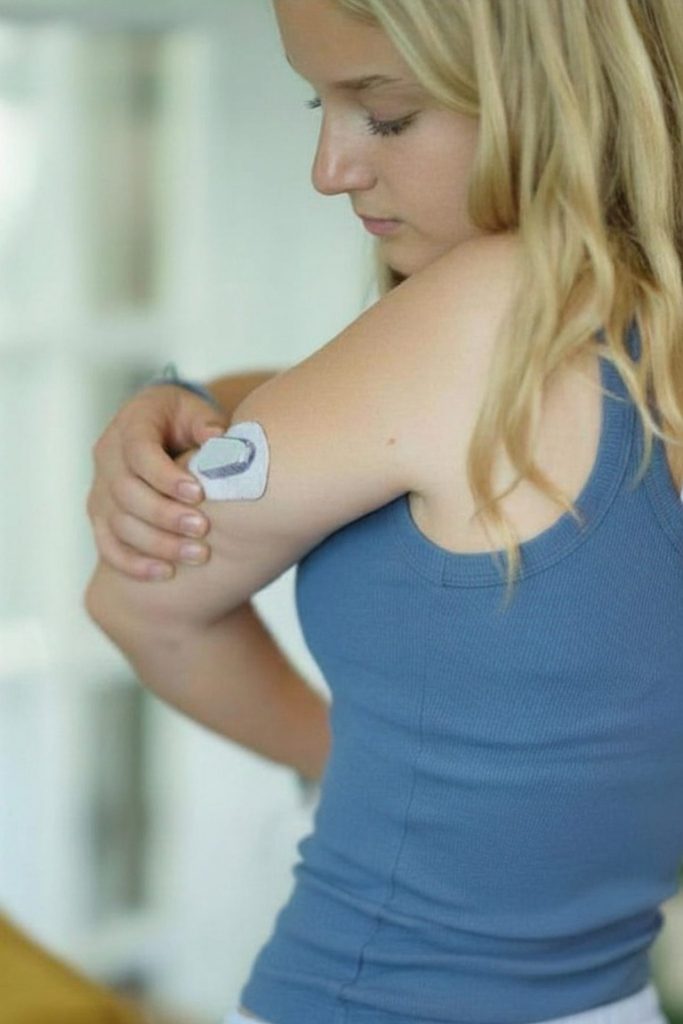
Continuous glucose monitors are everywhere right now. Open Instagram and you'll see them on the arms of athletes, wellness influencers, and people who just want to “optimize” their health. So it was no surprise when a friend of mine — who's also a doctor — called me about one of her patients, a teen she's trying to help reach a healthier weight. Her question was simple: “Should I put them on a glucose monitor?” It's a fair question, and a really common one, so if you've been wondering whether a glucose monitor for teens is worth it, let me give you the same honest answer I gave her.
What Is a Glucose Monitor, and Why Are Teens Wearing One?
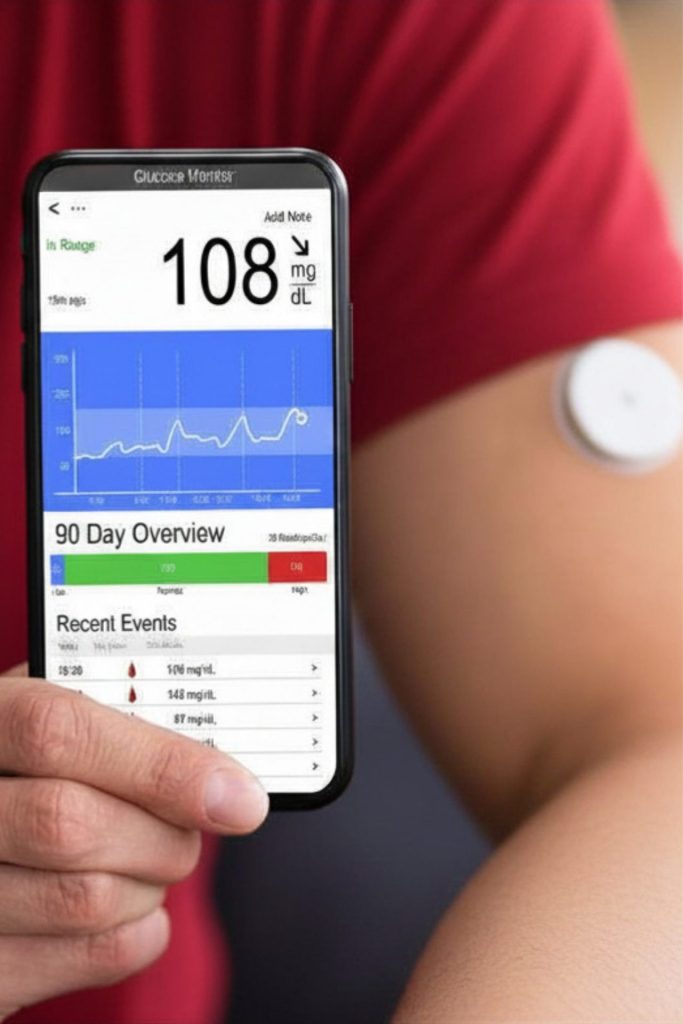
A continuous glucose monitor (you'll see it called a CGM) is a small sensor worn on the back of the arm, the stomach, the thigh, or the upper buttock — anywhere there's soft tissue just under the skin. Here's the part most people don't realize: it doesn't measure sugar in your blood directly. It measures sugar in the fluid between your cells and gives you a running picture of how your levels rise and fall through the day.
These devices were invented for a very specific reason — to help people with diabetes, especially those who take insulin, stay safe and avoid dangerously low blood sugar. For that job, they're wonderful. I prescribe them for my own patients with diabetes all the time, and the American Diabetes Association now recommends them right from diagnosis for anyone on insulin. In that setting, they genuinely save lives.
The newer trend is different. Now people without diabetes are buying them out of pocket to track their food, manage prediabetes, or chase a healthier weight. That's where the science gets a lot less clear — and where a glucose monitor for teens needs a much more careful conversation.
A Glucose Monitor for Teens Is a Screening Tool, Not a Treatment
Here's the most useful way I've found to think about it: a glucose monitor for teens can be very good at showing you something, and not very good at changing anything by itself. Those are two completely different jobs.
On the “showing” side, the science is genuinely interesting. A monitor can reveal patterns in real time that a once-a-year blood test would never catch. The ADA's 2026 Standards of Care even created a formal category for these consumer devices — “over-the-counter CGM” — for people who aren't on medications that can cause low blood sugar.
But here's the honest part the ads leave out: that same 2026 guidance is clear that there isn't yet enough evidence to use these monitors to screen for or diagnose prediabetes. And it specifically emphasizes that a monitor is most helpful only when it's paired with real education and ongoing support — not worn alone. So for a teen who straps one on hoping it'll fix prediabetes or melt away weight by itself, the evidence simply isn't there.
There's another reassuring truth worth knowing: in kids and teens, prediabetes often improves on its own. Researchers still don't have a reliable way to predict which young people will progress to type 2 diabetes — partly because so many spontaneously return to normal blood sugar. (According to a 2026 review of pediatric prediabetes prediction models indexed in PubMed, no validated tool yet exists for forecasting that path in youth. Diabetes Therapy, 2026.) In other words, a number on a screen can't tell you your teen's future — and panic isn't the plan.
Why a Glucose Monitor for Teens Falls Flat on Its Own
Why would a high-tech gadget fall flat? Because a monitor is a tool, not a coach. When a teen eats, watches the number climb, and has nobody to help them make sense of it, the usual reaction is a shrug. They saw it. Nothing changes. The number only becomes useful when someone is looking at it with them — talking through what happened and helping them adjust the next meal or the next day.
That's the difference between data and guidance. And it's a big one.
The Risk Nobody Talks About: Teaching Teens to Fear Food
Here's what I think about most, and why I'm cautious about handing a teen a monitor and walking away.
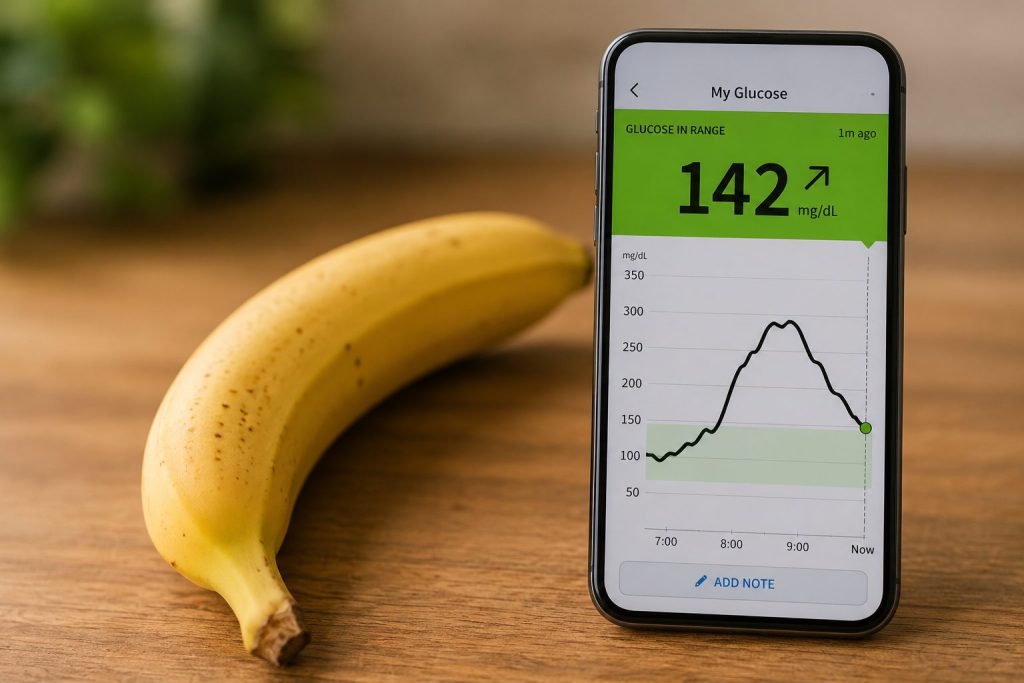
A rise in blood sugar after eating carbohydrates is completely normal. Eat a banana and your sugar goes up. Eat a piece of chicken and it barely moves, because chicken has no carbohydrates. That's not a problem — that's just how a healthy body works. Most of us never notice it because we're not wearing a sensor beeping about it all day.
But put that same normal rise in front of an anxious teen, with no one to explain it, and something can quietly go wrong. They see the banana “spike” and decide bananas are bad. Then fruit is bad. After this bread becomes bad. This way, they might end up cutting whole food groups their growing body actually needs — sometimes drifting toward very restrictive eating that carries real risks for growth and bone development at this age.
I want to be precise here, because precision matters. We do not have data showing that glucose monitors cause eating disorders. That's not a proven link. It's a concern I keep turning over, especially for teens, who are simply more vulnerable to disordered eating than adults. A tool that can't reliably change habits on its own, but might unintentionally feed a fear of food, is exactly why I want a glucose monitor for teens used with real care — and with a person in the loop.
What Actually Helps: Improving Insulin Sensitivity in Teens Without Dieting

If the monitor can show but not fix, what does the fixing? The boring, unglamorous truth: daily routines. The way your teen eats, moves, and sleeps does far more to improve insulin sensitivity than any sensor on their arm. And you really can improve insulin sensitivity in adolescents without dieting, without calorie counting, and without making food the enemy.
If you want somewhere to start today, pick one thing — not ten:
- Add protein and fiber to breakfast. Pairing carbs with protein and fiber steadies the rise in blood sugar far more reliably than cutting carbs out. Start with eggs and fruit, or Greek yogurt with berries.
- Take a 10-minute walk after the biggest meal. Movement after eating helps muscles use glucose. It's small, it's doable, and it adds up.
- Protect sleep. Short sleep nudges hormones in the wrong direction. A consistent bedtime does quiet, behind-the-scenes work no gadget can replicate.
That's the whole philosophy behind how I work with families. No diets. No shame. Just the hormones working the way they're supposed to. A good plan helps a teen build steady habits and read their own body with calm instead of fear — which is the opposite of what staring at a number all day tends to produce. If you've been searching for a pediatric weight management program that doesn't focus on dieting, or body-positive support for a teen with prediabetes, this is exactly the gap a glucose monitor for teens can't fill on its own.
When a Glucose Monitor for Teens Can Actually Help
I'm not anti-monitor, and I want to be fair about it.
If a family wants to use one and a health coach or clinician is actually looking at the data with the teen — discussing the patterns, using it to guide real changes — then yes, it can add awareness and be a useful piece of a bigger plan. The monitor earns its keep when there's a human in the loop. That's not just my opinion; it's what the ADA's own 2026 guidance underscores: these devices work best alongside education and support.
What I'd steer you away from is buying one, strapping it on, and expecting the device alone to do the work. At roughly $50 to $100+ a month out of pocket (insurance generally won't cover it for a teen without diabetes), that's a lot to spend on something the science hasn't shown to help on its own.
Frequently Asked Questions
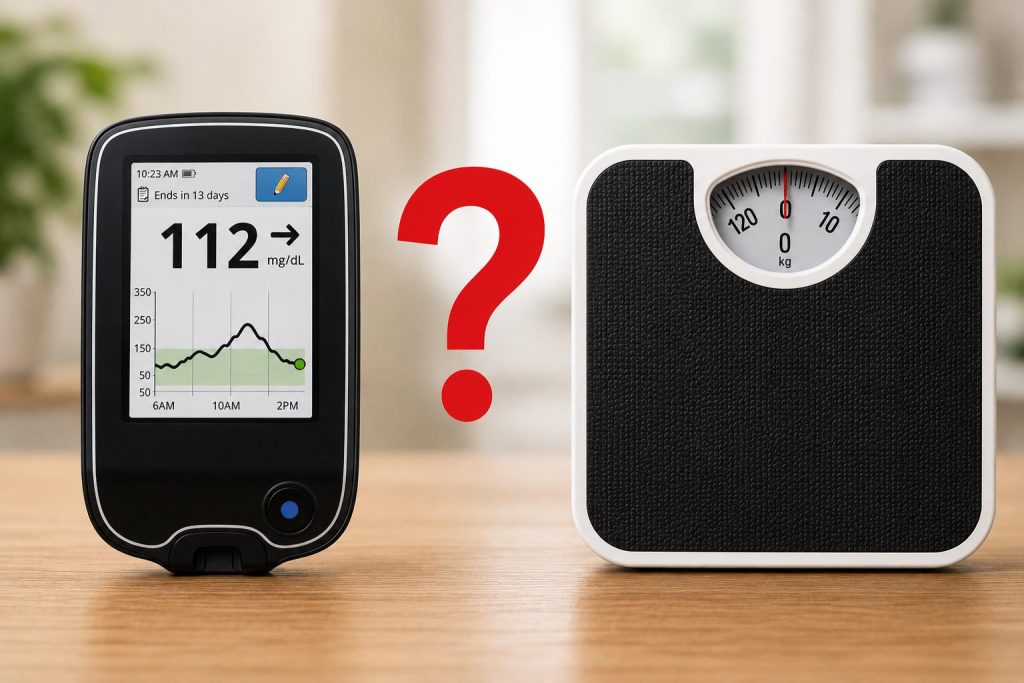
Can glucose monitor help teens with prediabetes lose weight?
For teens without diabetes, current evidence does not show that wearing a glucose monitor for teens alone helps with weight loss as a stand alone tool. It may be useful as part of a coached program, but the glucose monitor sensor by itself isn't a weight-loss tool.
Are glucose monitors safe for teens? The device itself is generally safe and well tolerated. The bigger concern is psychological: without guidance, constant number-watching can push a vulnerable teen toward fearing normal foods. There's no proven link between monitors and eating disorders, but it's a reasonable thing to be careful about.
Does insurance cover a glucose monitor for prediabetes? Usually not. Monitors are typically covered for people with diabetes, especially those on insulin. For a teen with prediabetes or insulin resistance, it's almost always out of pocket. The usual cost is often around $50 to $100+ a month.
What are the signs of insulin resistance in teens? There are several signs many parents miss. I put the three most overlooked ones into a free guide you can grab below.
A Gentler Place to Start
If your teen is dealing with prediabetes or insulin resistance, you don't need to spend hundreds of dollars a month to make progress. You need a calm, no-diet plan — and a real person who can help you read what's actually going on.
If you'd like to know the signs most parents miss, download my free guide, 3 Hidden Signs of Insulin Resistance. When you're ready to talk it through, you can book a free call with me. You can also start small with the 7-Day Mini LIFT for $25.
Small habits, repeated, are the kind of progress that sticks.
About the Author
Dr. Jenny Gourgari, MD — Pediatric Endocrinologist & Obesity Medicine Specialist
Dr. Jenny is a board-certified Pediatric Endocrinologist and Obesity Medicine Specialist with 15+ years of experience helping teens with insulin resistance and prediabetes. She is the founder of Lifestyle for Teens and creator of the LIFT 100-Day Program. No diets. No shame. Just hormones that work.
Board Certified: Pediatric Endocrinology • Pediatrics • Obesity Medicine (ABOM) • MSc, Georgetown University • Full credentials →





No comment