


7 Shocking Healthy Foods That Spike Insulin in Teenagers
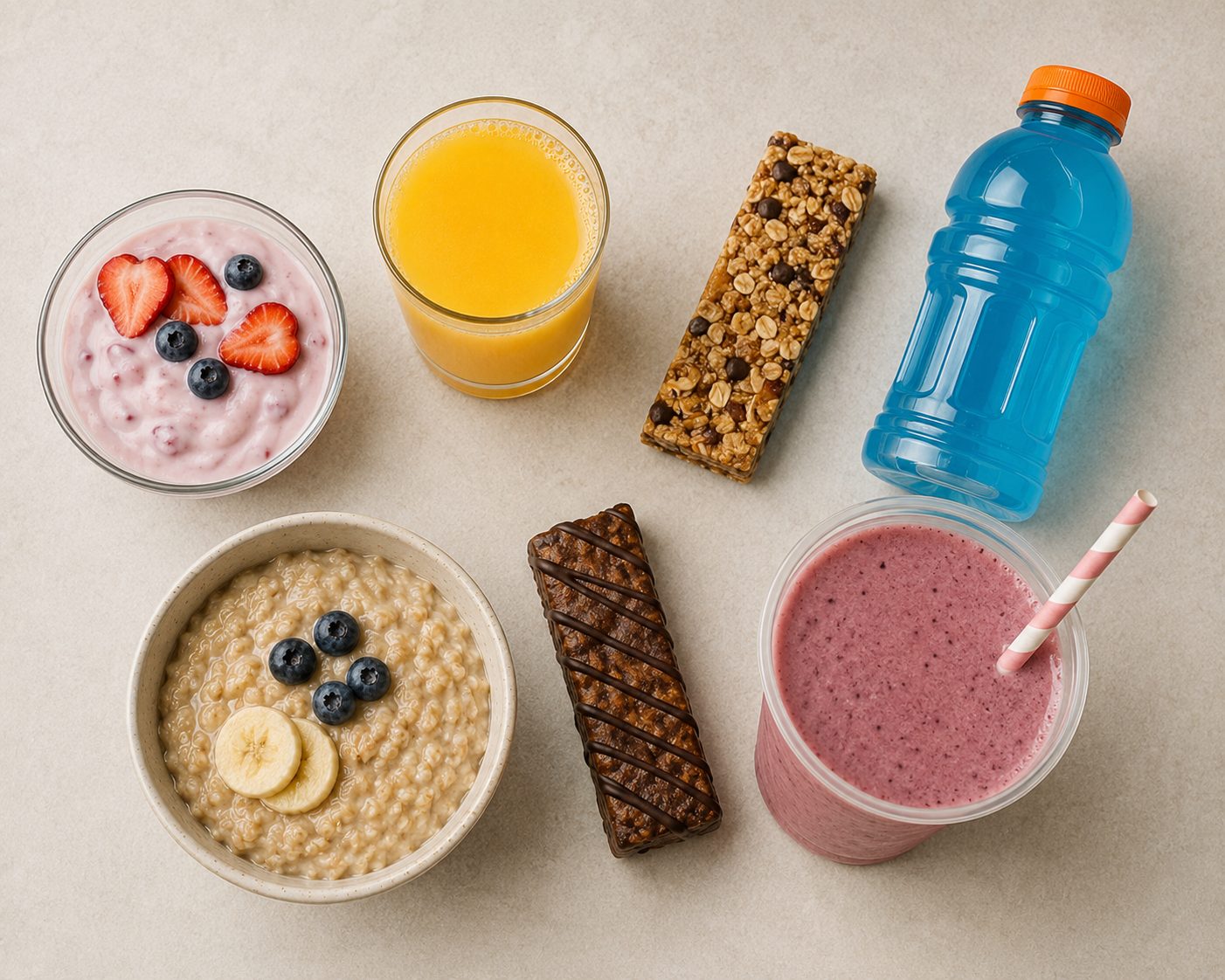
Many of the healthy foods that spike insulin in teenagers are already sitting in your kitchen right now.
Let me start with a scenario I hear from parents all the time. Tell me if it sounds familiar.
Your teenager is genuinely trying. They switched from soda to juice. They grab a granola bar instead of chips. There is a smoothie every morning. You feel like you are doing everything right.
But their weight is still creeping up. They feel tired every afternoon. And they crave sugar like clockwork at 3 pm. Nobody has explained why.
The answer is almost always the same. Healthy foods that spike insulin in teenagers are everywhere in the modern family kitchen. Most parents have no idea they are there.
Before we go any further, I want to be really clear about something important.
This is not a list of forbidden foods. All foods have a place in moderation. Restrictive eating in teenagers is something I talk about a lot in my practice. It can backfire badly. It affects teenagers psychologically. Over time, it can lead to disordered eating and actually cause more weight gain. That is absolutely not what we want here.
What I want to do today is help you understand the specific foods commonly believed to be healthy for teenagers. These are the foods that are actually keeping your teenager's insulin elevated all day long without either of you realising it.
When insulin stays chronically elevated, the body stores fat more readily. It also has a much harder time accessing stored fat for energy. This is the biology behind why so many teenagers feel stuck even when they are genuinely making an effort.
Let me walk you through the seven biggest offenders. And more importantly, what to swap them for.
Why Healthy Foods That Spike Insulin in Teenagers Are Such a Big Problem
Here is a quick piece of science. I promise to keep it simple, because it really does change everything once you understand it.
Every time your teenager eats sugar or refined carbohydrates, their blood sugar rises. The pancreas responds by releasing insulin. Insulin's job is to bring that blood sugar back down to a normal range.
When this happens occasionally and in moderate amounts, it is completely normal. The problem starts when this happens repeatedly throughout the day. When there is barely any gap between spikes, the body gets stuck in a cycle.
Insulin stays elevated because of repeated sugar hits from healthy foods that spike insulin in teenagers that families are unknowingly buying every week. Your teenager feels tired. They crave more sugar. They eat something that seems like a reasonable choice. Their insulin spikes again. And the cycle continues.
This connects directly to insulin resistance and prediabetes. I explain the full hormonal picture in my post on insulin resistance in teens.
The 7 Healthy Foods That Spike Insulin in Teenagers
Flavored Yogurt
Yogurt sounds like the perfect teen food. Protein, calcium, low fat. It is better than a bag of chips, I will give it that.
But here is what the label actually shows when you look closely.
Most flavored yogurts contain between 12 and 20 grams of sugar per serving. A significant portion of that is added sugar on top of the naturally occurring lactose. Even plain yogurt has naturally occurring sugar in it. The flavor just adds more on top.
The result is an insulin spike. Your teenager's blood sugar rises, then drops, then they feel hungry again within an hour or two.
The swap: Get plain Greek yogurt and add real fruit yourself. Throw in strawberries, blueberries, or banana slices. You get fibre from the fruit, protein from the yogurt, and none of the added sugar.
Fruit Juice
I know this one feels controversial because juice has vitamins and comes from fruit. But drinking orange juice is not the same as eating an orange.
When you squeeze a fruit into juice, you lose the fibre. That fibre is what slows the digestion of the fruit's natural sugar. Without it, the sugar hits the bloodstream quickly.
The American Diabetes Association notes that whole fruit consumption is consistently associated with lower diabetes risk compared to juice. The fibre makes all the difference.
The swap: Have the actual fruit. An orange, an apple, a handful of grapes. You get the vitamins, the fibre, and the hydration. The natural sugar is delivered slowly and does not cause the same insulin spike.
Granola Bars
This is the one that gets me every time, because the marketing around granola bars is genuinely impressive.
Made with whole grains. No artificial flavours. Natural ingredients. They sound like the ideal on-the-go snack.
Flip the package over and look at the label. Most granola bars from the grocery store contain between 10 and 18 grams of sugar. Some go even higher.
This puts granola bars firmly on the list of healthy foods that spike insulin in teenagers despite their wholesome image. The insulin spike that follows means your teenager will be hungry again within an hour.
The swap: Grab a hard-boiled egg, a piece of string cheese, an apple, or a small handful of almonds. These give real protein, healthy fat, and fibre. They keep insulin stable and hunger away for longer.
Sports Drinks
Gatorade, Powerade, and their equivalents are marketed aggressively as health products. Electrolyte replenishment. Hydration. Energy. The branding is very convincing.
A standard large bottle of Gatorade contains around 34 grams of sugar. You might think that is less than a can of soda, and you would be right. But the real issue is how they are consumed.
Sports drinks are usually sipped throughout an activity. This means the body receives repeated small sugar hits over time. Each one triggers a small insulin response. Insulin stays elevated for the entire duration.
The Mayo Clinic confirms that for most teenagers, the best hydration during and after exercise is water. Sports drinks are designed for prolonged, intense athletic activity over 60 to 90 minutes. A regular school sports session does not generally require one.
The swap: Water. Plain water is the best hydration tool available. If your teenager wants flavour, unsweetened sparkling water or coconut water with no added sugar are solid options.
Flavored Instant Oatmeal
Plain oatmeal is genuinely a wonderful food. Steel-cut oats, especially. High in fibre, digested slowly, and is one of my personal favourite breakfasts.
So this is a nuanced one. The problem is not oatmeal. The problem is what happens to oatmeal when it becomes instant and flavored.
Flavored instant oatmeal packets are sweetened and processed. This strips out much of the fibre. It also changes how quickly the carbohydrates are digested. Instead of a slow, steady release of energy, you get a faster blood sugar rise and the insulin spike that follows.
The swap: Choose plain, rolled oats or steel-cut oats. Add blueberries or banana slices for sweetness. A spoonful of peanut butter or a splash of milk for protein. And a few almonds for healthy fat. This combination gives genuine, sustained energy and stable blood sugar.
Protein Bars
This one surprises a lot of parents and teenagers, because the whole point of a protein bar is that it is supposed to be a healthy food.
The protein content is real. Twenty grams of protein in a single bar is impressive. The problem is what else is in there alongside it.
Many popular protein bars contain 20 to 25 grams of sugar alongside that protein. They also often contain artificial sweeteners like erythritol and sorbitol. The ingredients list is long and most of it is unrecognisable.
These bars were originally designed for athletes running marathons. That context is completely different from a teenager using one as a mid-afternoon snack.
The swap: Try a boiled egg, a portion of cottage cheese, a small serving of Greek yogurt, or a handful of mixed nuts. These are whole foods. They deliver protein without the hidden sugar and artificial additives.
Commercial Fruit Smoothies
A smoothie made at home with real fruit, plain yogurt, and no added sugar is a genuinely healthy choice.
The confusion happens when teenagers and parents assume that any smoothie is healthy. This includes the large ones from popular smoothie chains.
Some commercial smoothies contain between 60 and 80 grams of sugar per large serving. That is more than many soft drinks. They often use frozen fruit with added sugar, sweetened juices as the base liquid, and sometimes ice cream or flavored syrups.
The fact that it contains fruit does not automatically make it a low-insulin choice.
The swap: Make smoothies at home where you control every ingredient. Use one serving of real fresh fruit. Add plain Greek yogurt or cottage cheese for protein. Use plain milk or unsweetened plant-based milk as the liquid. Skip the added sugar entirely.
How to Identify Healthy Foods That Spike Insulin in Teenagers by Reading Labels
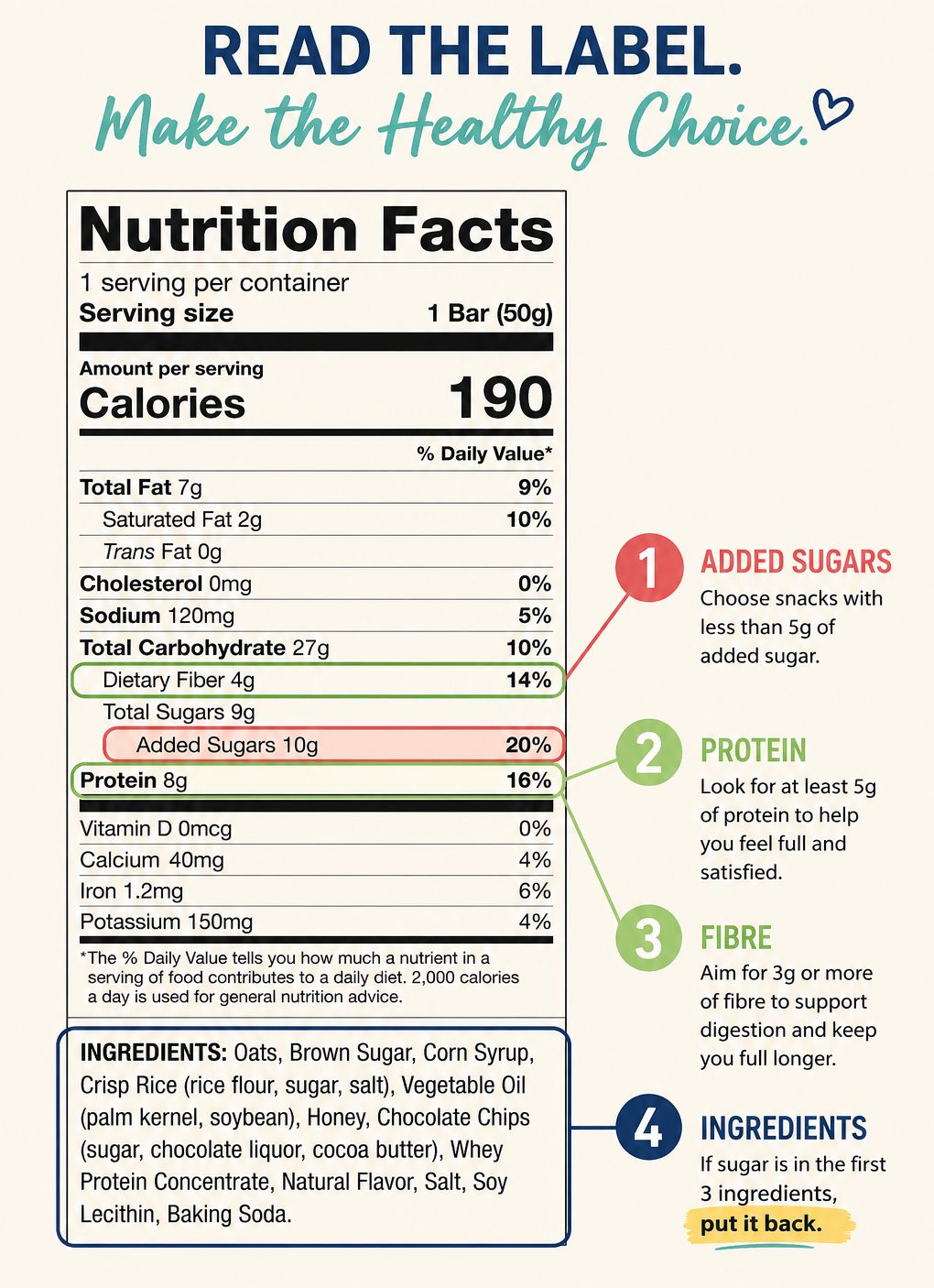
What to Look For on the Back of the Pack
The front of a package is marketing. The back is information. One of the most empowering things I can teach a teenager or parent is how to read a food label properly.
Here is exactly what to look at when you turn a product over:
- Added Sugars: This is the most important number. It shows how much sugar was added beyond what occurs naturally. Aim for less than 5 grams per serving for snacks and as close to zero as possible for drinks.
- Protein: For a snack to keep insulin stable, aim for at least 5 to 8 grams. For a meal replacement, aim for 15 to 20 grams.
- Fibre: More is always better. Fibre slows carbohydrate digestion and reduces blood sugar spikes. Aim for at least 3 grams per serving.
- Ingredients list: Ingredients are listed from most to least by weight. If sugar, corn syrup, or any sweetener appears in the first three ingredients, put it back.
- Serving size: Always check this first. A product may look fine until you realise the serving size is half of what your teenager would actually eat.
Teach Your Teenager to Do This Check
Even just checking the added sugar line and the protein line is enough to start. This is one of the most practical nutrition skills your teenager can build.
It takes less than 30 seconds. Over time, it becomes automatic. And it is far more useful than any diet rule you could give them.
Why Avoiding These Foods Does Not Have to Feel Like a Punishment
Start With One Swap, Not Seven
The goal is never to take everything away. What we are trying to do is help your teenager's insulin system work with their body instead of against it.
When that happens, they feel less tired. Cravings decrease. Weight becomes easier to manage. And it stops feeling like a constant battle.
Pick one swap this week. Not seven. Just one.
Switch flavored yogurt for plain Greek yogurt with fruit. Maybe it is putting a few hard-boiled eggs in the fridge for afternoon snacks, or just trying water instead of a sports drink after practice for the next two weeks.
Progress, Not Perfection
Small, consistent changes are how lifestyle shift actually happens. Perfection is not the goal. Gradual progress is.
None of this is your teenager's fault. These foods are heavily marketed and genuinely believed to be healthy choices by millions of families.
Knowing better now is what matters. The changes you make from here will add up in ways that genuinely surprise you.
YOUR NEXT STEPS:
- Want to understand the root cause of Prediabetes and Insulin Resistance in teenagers? Read: 7 Alarming Facts About Prediabetes in Teenagers Every Parent Must Know
- Teen already diagnosed with Prediabetes? Read: How to Reverse Prediabetes in Teenagers
- For weekly guidance on teen hormones and metabolic health, listen to the Lifestyle and Weight Loss for Teens Podcast
- Grab 30 free high-protein recipes that support healthy insulin levels — free at members.lifestyleforteens.com/f/30-easy-and-healthy-recipes-for-teens
Ready for real, structured support? The MINI LIFT Program is designed specifically for teen girls navigating PCOS, insulin resistance, and hormonal imbalances. A clear plan. Expert guidance. A community that gets it. No restriction. No shame. Just small, consistent habits that build real change. Join the MINI LIFT Program here.
Common Questions
Why does my teenager crave sugar all afternoon, even when they eat a healthy breakfast?
This is one of the most common questions I get from parents. If your teenager ate flavored yogurt, juice, or a granola bar in the morning, their blood sugar likely spiked and then dropped. That drop triggers a craving for more sugar. The brain is trying to bring energy levels back up. This is not a lack of self-control. It is a hormonal response to a blood sugar rollercoaster. Switching to a high-protein breakfast with slow-releasing carbohydrates breaks this cycle quickly for most teenagers.
Are all granola bars bad for teenagers?
What about zero-sugar sports drinks?
How do I know if my teenager has high insulin levels?
About the Author
Dr. Jenny Gourgari, MD — Pediatric Endocrinologist & Obesity Medicine Specialist
Dr. Jenny is a board-certified Pediatric Endocrinologist and Obesity Medicine Specialist with 15+ years of experience helping teens with insulin resistance and prediabetes. She is the founder of Lifestyle for Teens and creator of the LIFT 100-Day Program. No diets. No shame. Just hormones that work.
Board Certified: Pediatric Endocrinology • Pediatrics • Obesity Medicine (ABOM) • MSc, Georgetown University • Full credentials →





No comment